We are collecting impact stories about roundtables in your county.
Impact and Stories
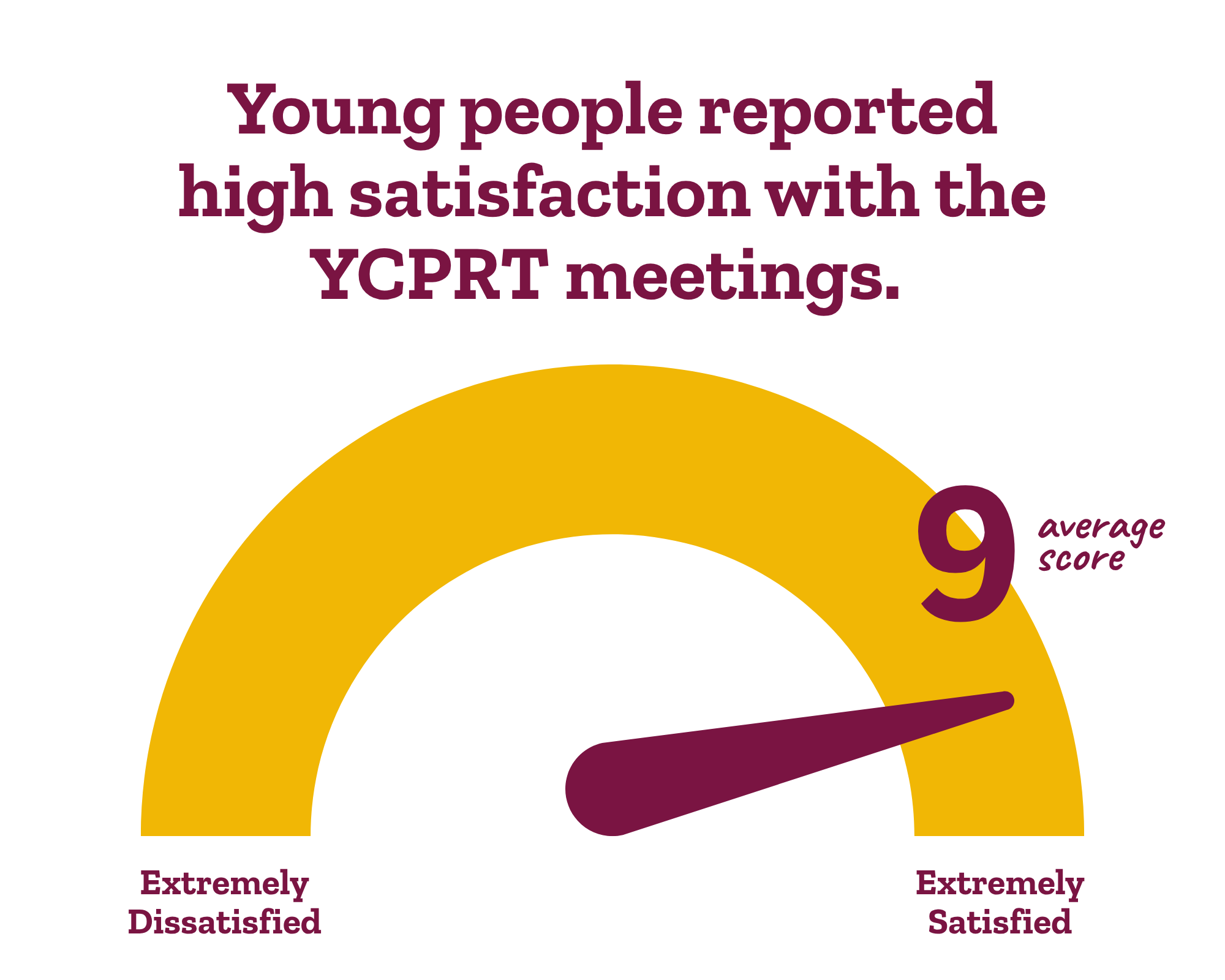
YCPRT young people share feedback, impact, and stories based on their experiences with the YCPRT program:

%
Described as Useful
81% of participants described YCPRTs as moderately, very, or extremely useful in supporting their work with youth.
%
Achieved Permanency
Youth receiving YCPRTs were more likely to achieve permanency, compared with 15% of youth who aged out.
%
Described Positive Impact
3 out of 4 participants described the impact of YCPRTs as somewhat or extremely positive.
%
Would Recommend
75% of survey respondents would recommend the YCPRT model to other agencies.
“In the round table meetings, I feel that my voice is heard and I feel like it has power.”
- YCPRT Young Person


Stories of
*Names and identifying information have been changed for purposes of confidentiality.
The situation
Bashia Price, the statewide facilitator for the Youth-Centered Permanency Roundtables program, was working with Madison, a youth who was uncertain about what she wanted in the future. Bashia and the caseworker explored Madison’s options during the youth preparation process.
Madison was attached to her foster parents and was in a planned permanent living arrangement (PPLA). However, she was interested in connecting with her biological mother who lived out of state. She was also close to her grandmother who was caring for Madison’s sibling who was expecting a baby. Madison was worried about her foster family’s feelings about connecting with her birth relatives.
The facilitation
Bashia and her caseworker were able to arrange a phone call with Madison’s biological mother and grandmother to reconnect with them. Next, they arranged a roundtable meeting, inviting both Madison’s foster and biological families, as she requested. When it came time for the strengths bombardment, a portion where people described the youth’s strengths, everyone shared their love for Madison.
Bringing together her foster family and her biological relatives was extremely moving. This empowered Madison to ask for what she wanted, which was to relocate to live with her mother. Her mother agreed, and they developed an action plan that would lead to this.
The outcome
This fall, Madison will visit her mother. Later, her mother will visit her here in Ohio. Then, Madison will relocate to live with her mother in the summer, with her foster mother accompanying her to help with the transition. Bashia was overjoyed to guide Madison in building lifelong connections and the future that she deserves.


Navigating Reconnection
*Names and identifying information have been changed for purposes of confidentiality.
A teenager had been agency custody since the age of 8, due to violence in the home. He had bounced between foster homes, group homes, and residential treatment centers with serious challenges resulting from the trauma the youth experienced.
While planning for the first YCPRT, the youth shared something that is common: he had reconnected with his mother via social media. His father, who had been the perpetrator of the violence, was deceased. The youth was afraid to share this, thinking the agency would not allow him to invite his mother as a support person to the roundtable discussions. In fact, the agency was happy to invite her.
According to the YCPRT facilitator, “It was her first chance to see him in years. She was the perfect member of our table. She never missed a meeting, even though she was working 2 or 3 jobs. Her presence allowed him to speak freely, to talk about what was important to him, who his supports are, and what he wanted for his
future.”
In the end, the agency was able to work with the court to go back and replace the permanent custody order that removed his mother’s parental rights and consider her as a caregiver. It has been several years, and the family is doing well.
This specific site for many years started with over 200 youth in agency custody and now are around 50.